
Cayman Foundation for Web3: Pros, Cons & Setup Guide
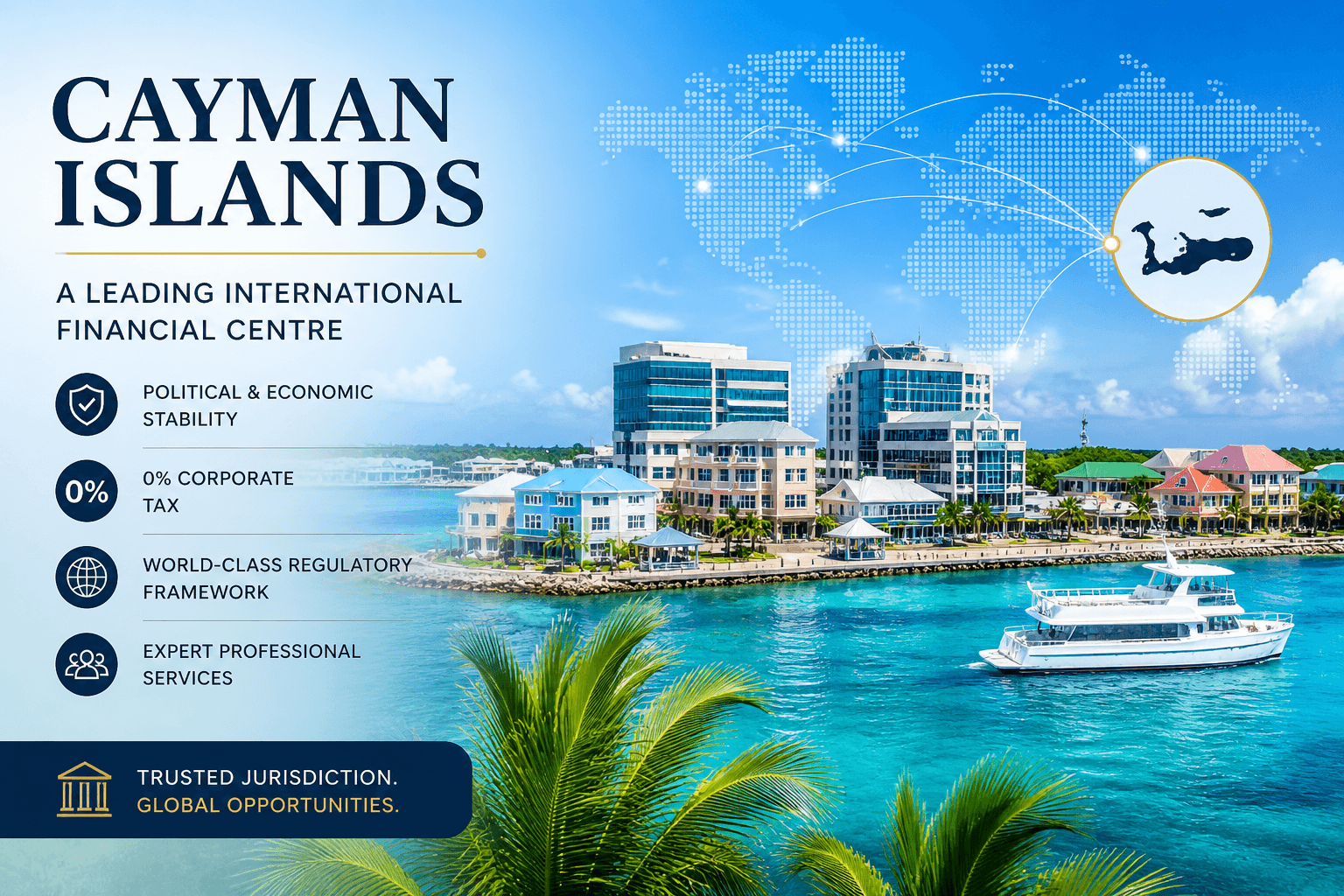
For web3 founders navigating entity structure decisions, few questions generate more debate than whether to establish a Cayman Foundation Company. Decentralised protocols, DAO governance layers, token-issuing projects, and open-source ecosystems have increasingly turned to this structure — and for good reason. But the Cayman foundation is not a one-size-fits-all solution, and understanding its trade-offs is critical before committing to incorporation. This guide walks through what a Cayman foundation actually is, why the web3 industry has gravitated toward it, and where it can create friction.
What Is a Cayman Foundation Company?
A Cayman Foundation Company is a hybrid legal entity established under the Foundation Companies Act, 2017 in the Cayman Islands. It blends characteristics of a company and a traditional civil-law foundation: it has legal personality, can hold assets, enter contracts, and employ staff — but it has no shareholders. Instead, it operates for defined purposes or for the benefit of named or described beneficiaries, or both.
Unlike a trust, a foundation company does not require a settlor-trustee relationship. Unlike a traditional offshore company, it can operate without owners in the conventional sense. This ownerless, purpose-driven architecture is precisely what makes it compelling for decentralised projects. You can learn more about the specific mechanics of this vehicle on the Cayman Foundation Company jurisdiction page.
Why Web3 Projects Choose the Cayman Foundation
The web3 industry's adoption of the Cayman foundation is not accidental. Several structural characteristics align tightly with the operational and legal needs of decentralised projects.
Decentralised Governance Compatibility
Because a Cayman foundation has no shareholders, it maps naturally onto DAO governance models. Token holders, community councils, or governance committees can be written into the constitutional documents as supervisors or enforcers — without creating equity relationships that might trigger securities law issues in other jurisdictions. The foundation can formally represent the protocol without any individual or corporate entity being deemed its "owner."
Purpose-Driven Structure for Protocol Stewardship
Web3 foundations are frequently set up to steward open-source software, administer grant programmes, manage ecosystem funds, or hold intellectual property on behalf of a community. The Cayman foundation's purpose-driven framework makes this legally coherent. You can define the foundation's mission in its articles — for example, promoting development of a specific blockchain protocol — and that mission governs how directors and supervisors must act.
Tax Neutrality
The Cayman Islands levies no corporate income tax, capital gains tax, or withholding tax on foundations. For a protocol foundation that receives token donations, manages a treasury, or facilitates grants, this tax neutrality is operationally significant. There are no local taxes eroding the ecosystem fund.
Established Legal Infrastructure
Cayman has a mature common-law legal system, sophisticated local counsel, and international recognition. Counterparties — including institutional investors, custodians, and exchanges — are generally comfortable transacting with Cayman entities. The jurisdiction also has a well-developed network of licensed corporate service providers and registered offices.
If you are evaluating how this fits alongside your broader multi-entity structure, the web3 structuring use cases on Entity Engine outline common stacks that combine a Cayman foundation with operating subsidiaries in other jurisdictions.
The Pros at a Glance
No shareholders or equity: Prevents ownership disputes and aligns with decentralisation principles.
Purpose-driven governance: Mission can be enshrined in constitutional documents and enforced by a supervisor.
Tax neutral jurisdiction: No corporate, capital gains, or withholding taxes in Cayman.
Strong international credibility: Recognised by banks, exchanges, institutional partners, and investors globally.
Flexible beneficiary design: Can serve a community, token holders, a charitable mission, or a combination.
Scalable structure: Can hold subsidiary companies, IP, and treasury assets across multiple jurisdictions.
Common-law legal system: Predictable, well-documented, and familiar to international counsel.
The Cons and Real-World Friction Points
The Cayman foundation is well-suited to many web3 scenarios, but it comes with genuine challenges that founders should not underestimate.
Cost and Ongoing Compliance
Incorporation and annual maintenance costs for a Cayman foundation are meaningfully higher than those for a simple offshore company. You will need a licensed registered office, a qualified secretary, annual filings, and in many cases ongoing corporate governance advisory. For early-stage projects with limited budgets, this overhead can be substantial.
Banking and Financial Access
Despite Cayman's credibility with institutions, banking remains one of the most consistent pain points for foundation companies. Many retail and neobanks will not service Cayman foundations, and even specialist offshore banks can impose lengthy onboarding timelines and enhanced due diligence requirements. Web3 projects should budget significant time for banking setup and consider whether a subsidiary entity in a more bank-friendly jurisdiction is needed for operational accounts.
Regulatory Perception in Some Markets
While the Cayman Islands is FATF-compliant and has made significant strides on beneficial ownership transparency, some regulators — particularly in the EU — view Cayman structures with additional scrutiny. If your project is seeking a licence or regulatory approval in the EU or UK, a Cayman foundation holding layer may complicate the application. Teams targeting European users should also be aware of obligations under frameworks like MiCA. Our post on EU MiCA and what web3 projects need to know covers the relevant regulatory landscape in detail.
Not a Substitute for Operational Licences
A Cayman foundation is a holding and stewardship vehicle, not an operating licence. If your project needs to offer financial services, issue regulated tokens, or operate an exchange, you will need a separately licensed entity in an appropriate jurisdiction. The foundation typically sits at the top of a multi-entity stack rather than serving as the primary operating entity.
Governance Complexity
The absence of shareholders can actually introduce governance ambiguity if the constitutional documents are not drafted carefully. Who can remove a director? Who enforces the foundation's purposes? How are decisions made when token governance conflicts with the legal governance layer? These questions require careful legal drafting and ongoing governance maintenance — this is not a set-and-forget structure.
How It Compares to Alternatives
The Cayman foundation is not the only option for web3 projects seeking a purpose-driven or decentralised-friendly entity. The BVI, Panama, and Singapore are also commonly used jurisdictions. A comparison of top offshore jurisdictions for holding companies provides useful context on how Cayman stacks up against its nearest competitors on cost, credibility, and flexibility. For projects that want a lighter-touch offshore holding vehicle rather than a full foundation structure, options such as a BVI Limited Company may serve as a more cost-effective alternative at early stages.
Typical Web3 Use Cases
Protocol foundations: Layer-1 and Layer-2 networks use Cayman foundations to hold protocol IP, manage grants, and represent the project to the outside world without creating equity ownership.
DAO legal wrappers: DAOs seeking a legal interface for signing contracts, holding treasury assets, and protecting contributors from personal liability.
Token ecosystem funds: Foundations that hold a portion of token supply and deploy capital to ecosystem development, marketing, and research according to governance votes.
Multi-entity group apex: A Cayman foundation sitting above operating subsidiaries in Singapore, the UAE, or Ireland — capturing assets at the top while operating through regulated entities below.
For those unsure whether a token structure is appropriate for their project, the token structure quiz on Entity Engine is a useful starting point for scoping your options.
Conclusion
The Cayman foundation remains one of the most powerful and credible legal vehicles for web3 projects that need a purpose-driven, ownerless structure with international standing. It is particularly well-suited to protocol stewardship, DAO governance, and ecosystem fund management. However, it carries real costs — financially, operationally, and in terms of banking access — that make it more appropriate for projects at a stage where those costs are justified by the structure's benefits. Getting the constitutional documents right, pairing the foundation with appropriate operational entities, and maintaining disciplined governance are non-negotiable. If you are ready to explore whether a Cayman foundation is the right fit for your project, browse all available jurisdictions on Entity Engine to map out your full structuring options.