
Why Zug is one of the World's Top Jurisdiction for Web3 Entities
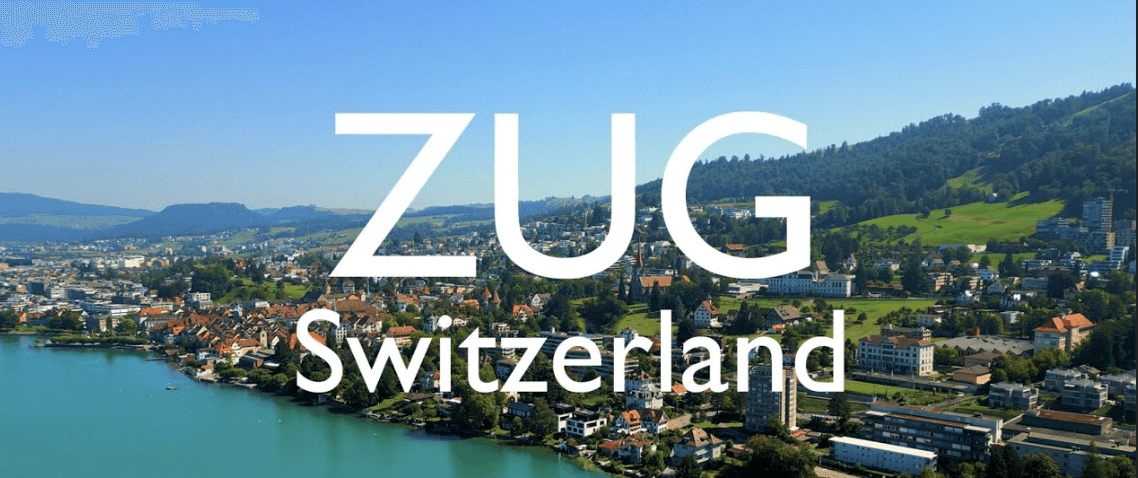
If you're building a blockchain protocol, launching a token, or structuring a DAO, you've almost certainly heard someone mention Zug. The small Swiss canton has quietly become the global nerve centre for serious web3 entity formation — and not by accident. While other jurisdictions compete on tax rates or speed of incorporation, Zug competes on something harder to replicate: a coherent, mature, and genuinely crypto-friendly regulatory environment backed by one of the world's most stable legal systems. For founders who want long-term credibility alongside operational flexibility, that combination is difficult to beat.
What Is Crypto Valley and Why Does It Matter?
Crypto Valley is the informal name for the cluster of blockchain and web3 companies concentrated in and around Zug, Switzerland. What began with a handful of early Ethereum-era projects has grown into an ecosystem of hundreds of companies, foundations, funds, and service providers — all operating within Switzerland's federal legal framework but benefiting from Zug's notably low cantonal tax rates and its pragmatic attitude toward digital assets.
The density of like-minded companies, legal counsel, and technical talent in a single postcode creates network effects that no free zone or special economic zone elsewhere has yet replicated at the same quality level. When your lawyers, auditors, banking contacts, and peer founders are all within walking distance, deal velocity and institutional knowledge compound quickly.
The GmbH Zug: Your Primary Vehicle
The entity most web3 teams incorporate in Zug is the GmbH (Gesellschaft mit beschränkter Haftung), Switzerland's equivalent of a limited liability company. The GmbH Zug is a well-understood, respected structure that signals substance and seriousness to institutional counterparties, banking partners, and regulators worldwide.
Key structural features include:
Minimum share capital of CHF 20,000 — relatively modest but enough to demonstrate financial commitment.
Limited liability for all shareholders, protecting personal assets from company obligations.
Flexible governance — a managing director (Geschäftsführer) can be a non-Swiss resident, though at least one signatory with Swiss residency is typically required.
Full corporate legal personality, enabling the entity to hold assets, enter contracts, employ staff, and open bank accounts in its own name.
Substance requirements that are achievable without a large physical footprint — a registered office and a local director or representative generally suffice at the early stage.
Regulatory Clarity: FINMA and the Swiss Difference
One of the most compelling reasons founders choose Switzerland over offshore alternatives is the quality of the regulatory dialogue available here. FINMA (the Swiss Financial Market Supervisory Authority) has published detailed guidance on the treatment of tokens, distinguishing between payment tokens, utility tokens, and asset tokens. This taxonomy — now widely referenced internationally — means your legal team can advise with confidence rather than guesswork.
Switzerland's DLT Act, which came into force in 2021, created a dedicated legal basis for distributed ledger technology securities and introduced the DLT trading facility licence. For projects building infrastructure around tokenised assets or on-chain financial products, this is substantive legislative support rather than regulatory tolerance by omission.
Compared to jurisdictions where crypto sits in a grey zone, Switzerland offers written rules, published guidance, and a regulator willing to engage in pre-application discussions. That reduces legal uncertainty — and legal uncertainty is one of the most expensive things a web3 company can carry.
If you're weighing your options more broadly, our guide to the best jurisdictions for a token issuance vehicle in 2026 covers how Switzerland stacks up against Singapore, the Caymans, and other leading choices.
Tax Efficiency in Zug
Switzerland is not a zero-tax jurisdiction, and it doesn't try to be. What it offers is predictable, moderate, and internationally defensible taxation — which for many founders is more valuable than an aggressive offshore rate that creates banking friction and reputational risk.
Zug's combined federal, cantonal, and municipal corporate tax rate sits at approximately 11.9% — among the lowest of any OECD country. For companies with genuine substance in Switzerland, this rate applies to worldwide profits. There is no withholding tax on dividend distributions in many treaty scenarios, and Switzerland's extensive double-tax treaty network (covering over 100 countries) means that cross-border flows can be structured efficiently.
Importantly, Swiss tax authorities treat crypto assets pragmatically. Tokens held on a foundation or company balance sheet are assessed using established valuation principles, and there is clear guidance on how staking rewards, mining income, and token sales are taxed. This clarity matters enormously when you're preparing audited accounts or seeking institutional investment.
The Foundation Layer: When a GmbH Isn't Enough
Many mature web3 projects in Zug operate a two-entity structure: a Swiss foundation (Stiftung) alongside the operating GmbH. The foundation model is particularly popular for protocol governance, token issuance, and community treasury management, because a foundation has no shareholders — it exists to pursue a defined purpose, making it harder for any single party to claim ownership of the protocol.
This structure mirrors what the Ethereum Foundation and dozens of other major protocols have used to signal decentralisation and protect the project from being treated as a security issuer in restrictive jurisdictions. It's worth noting that similar thinking drives the popularity of the Cayman Foundation Company for web3 teams — but the Swiss version carries the additional weight of Swiss legal credibility and FINMA oversight.
The Stiftung requires a board of at least two members, a defined purpose, and registration with the cantonal register. Once established, it can hold IP, issue tokens, and manage ecosystem grants — functions that are difficult to house cleanly inside a pure commercial entity.
Banking Access: The Honest Picture
Switzerland's banking system is world-class, but access for crypto-native companies has historically required patience and preparation. The good news: the landscape has improved substantially. Specialist banks such as SEBA Bank and Sygnum — both FINMA-licensed — were purpose-built to serve digital asset firms and can provide multi-currency accounts, crypto custody, and fiat on/off ramp services under a single roof.
Traditional Swiss private banks and cantonal banks are increasingly accommodating crypto companies with clean compliance profiles, clear source-of-funds documentation, and genuine business substance. The message is consistent: arrive with a well-structured entity, a credible business plan, and thorough KYC documentation, and banking is achievable. This is a higher bar than some offshore jurisdictions, but the resulting accounts carry global correspondent banking access that many offshore accounts simply cannot match.
How Zug Compares to Competing Jurisdictions
It's worth being direct about trade-offs. Zug is not the fastest or cheapest jurisdiction to incorporate in. A GmbH incorporation typically takes four to six weeks and involves notarial requirements, capital deposits, and commercial register filings. Ongoing compliance — annual accounts, audit requirements above certain thresholds, and substance maintenance — adds to the operational cost base.
Jurisdictions like Singapore, the Caymans, or the BVI can be set up faster and more cheaply. But they serve different strategic purposes. A Singapore Pte Ltd is excellent for operational businesses targeting Asian markets. A Cayman Foundation Company is a strong choice for protocol governance when you want common law flexibility. Offshore IBCs in Seychelles or Nevis work well as holding layers in multi-entity structures.
What Zug offers that none of these can fully replicate is the combination of: a respected OECD-member legal system, a crypto-literate regulator, a deep local ecosystem, a moderate and defensible tax rate, and a reputation that opens doors with institutional counterparties who might decline to engage with a Caribbean holding company. For projects that intend to raise from VCs, list tokens on regulated exchanges, or partner with traditional finance, that reputation premium has real commercial value. You can explore the full range of available structures across dozens of jurisdictions on our jurisdictions overview.
Is a Zug GmbH Right for Your Web3 Project?
The honest answer depends on your stage, budget, and strategic priorities. If you're pre-revenue and need to move in weeks, an offshore structure might serve you better initially. But if you're building something that needs to last — a protocol, a fund, an exchange, a tokenised asset platform — Zug is worth the additional cost and timeline. The credibility, regulatory clarity, and ecosystem access compound over time in ways that cheaper jurisdictions simply don't.
To understand exactly how a web3 entity in Zug fits into your broader structure, explore our dedicated web3 use cases or get a personalised view of your token structure options with our token structure quiz.
Zug earned its reputation the hard way — by actually working for the companies that chose it. For web3 founders thinking long-term, that track record is the most compelling argument of all.