
Panama Residency: The Founder's Guide to a Second Flag
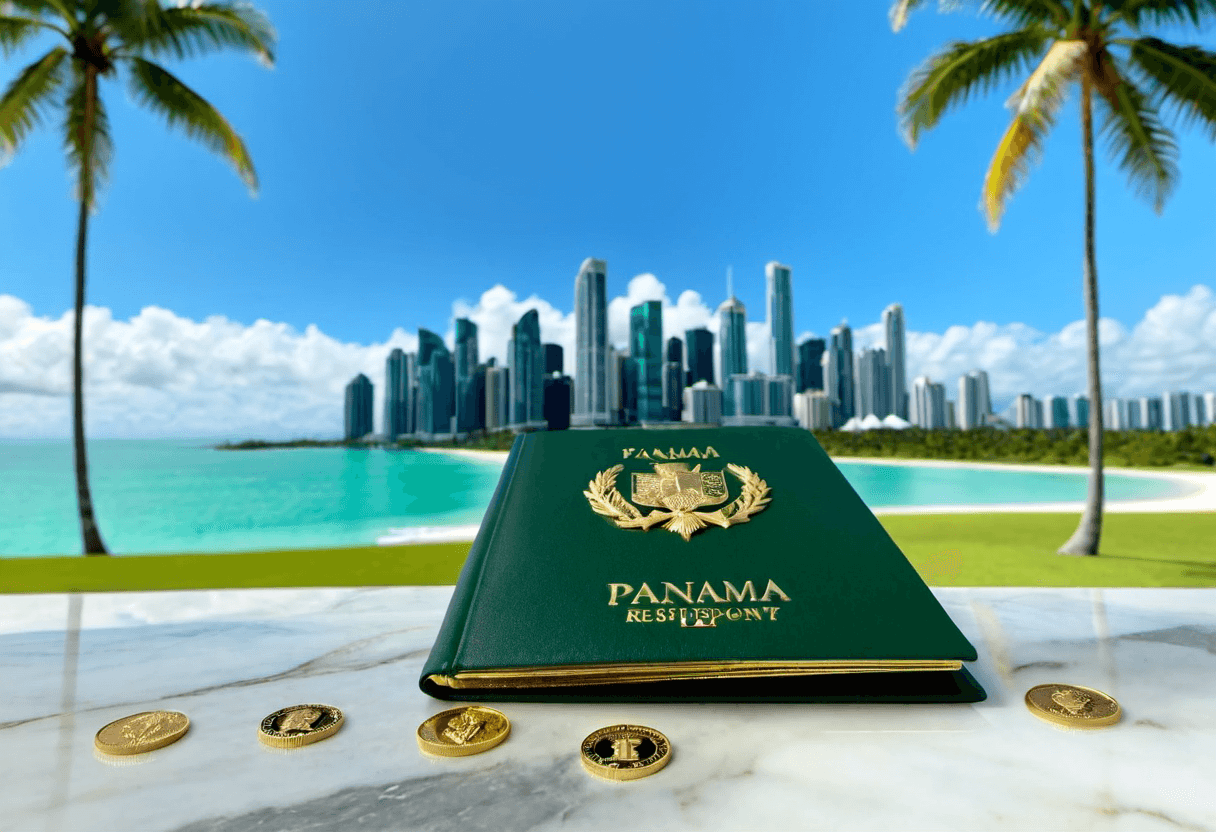
If you are a founder, operator, or web3 builder actively thinking about your personal flag structure, Panama deserves a serious look. While much of the conversation around second residency gravitates toward Dubai or Portugal, Panama has quietly remained one of the most pragmatic, well-established options in the Americas — combining straightforward residency pathways, a territorial tax system, a stable political environment, and a relatively low cost of entry. This guide breaks down exactly how Panama residency works, who it suits, and what you need to know before making a move.
Why Panama? The Case for a Second Flag Here
The concept of the "five flags" or multi-flag strategy — spreading your residency, citizenship, business, assets, and banking across different jurisdictions — has moved from niche libertarian theory into mainstream founder thinking. The core idea is simple: no single government should have complete leverage over your life and wealth.
Panama checks several important boxes for this strategy. It sits in a stable democratic republic in Central America, has used the US dollar since 1904 (eliminating currency risk for dollar-denominated income), operates one of the world's most significant shipping and logistics hubs, and hosts a well-developed banking sector with strong international connectivity. For founders who want a second flag that feels liveable — not just on paper — Panama delivers in a way that purely offshore jurisdictions cannot.
When comparing options across the Americas, it is also worth reviewing the broader jurisdictions available for entity structuring, since your residency and your operating entity often need to work in tandem.
Territorial Taxation: The Core Tax Benefit
Panama operates a strict territorial tax system. This means that only income sourced from within Panama is subject to Panamanian income tax. Income earned outside Panama — whether from a foreign company, overseas clients, investments, or digital assets — is entirely exempt from Panamanian taxation.
In practice, this is enormously powerful for location-independent founders. If you run a company incorporated elsewhere, receive consulting fees from international clients, hold crypto or equity in foreign entities, or earn dividends from offshore structures, none of that is taxable in Panama simply by virtue of your residency there. You are not required to report foreign-sourced income to Panamanian authorities.
This territorial approach is fundamentally different from the worldwide taxation systems operated by countries like the United States or the United Kingdom, where tax obligations follow citizens and residents globally. Panama's model means that establishing genuine residency there can meaningfully reduce your overall tax exposure — provided you have also addressed obligations in your country of origin or current tax residence.
It is worth noting that Panama is not a zero-tax jurisdiction for locally sourced income — standard corporate and personal income taxes apply to domestic activity. But for internationally focused founders, the foreign income exemption is the headline benefit.
The Main Panama Residency Pathways
Panama offers several well-established residency routes. The right one for you depends on your existing ties to Panama, your capital position, and whether you are structuring around an entity or a personal investment.
1. Friendly Nations Visa
The Friendly Nations Visa is arguably Panama's most popular residency route for internationally mobile professionals. It is available to nationals of approximately 50 countries that Panama maintains "professional and economic ties" with — a list that includes the United States, the United Kingdom, most of the EU, Canada, Australia, Singapore, and many others.
To qualify, applicants must demonstrate economic ties to Panama. This typically means one of the following:
Owning property in Panama (no minimum value requirement for this visa category specifically, though evidence of economic commitment is required)
Being employed by or operating a Panamanian company
Holding a professional title recognised in Panama
The Friendly Nations Visa leads directly to permanent residency, bypassing the typical temporary residency phase. Processing times have historically ranged from a few months to around a year depending on case complexity and document preparation. Holders can apply for Panamanian citizenship after five years of continuous residency.
2. Qualified Investor Visa (USD 200,000 Property Route)
For those who prefer a clean investment-based pathway, Panama introduced the Qualified Investor Visa, which requires a minimum investment of USD 300,000 in real estate, securities listed on the Panama Stock Exchange, or a fixed-term deposit at a Panamanian bank. The real estate route — often discussed in the context of a USD 200,000 threshold that applied under an older programme — has been updated, but property investment remains one of the most commonly used qualifying routes.
This pathway is well-suited to family offices or founders who are already considering Panama real estate as part of a broader asset allocation strategy. The investment must be maintained for the duration of the residency, and the visa grants permanent residency on approval.
3. Company Sponsorship: Working for or Starting a Panamanian Entity
Founders and operators who establish or work within a Panamanian company have a natural path to residency through employment or ownership. Under this route, a Panamanian company — whether a Sociedad Anónima or another recognised structure — sponsors the visa applicant as an employee or director.
For founders specifically, incorporating a Panamanian entity serves a dual purpose: it provides a legitimate local economic footprint and acts as the sponsoring vehicle for the residency application. A Panama Corporation (Sociedad Anónima) is a well-established, flexible structure that many international founders use for exactly this purpose — combining operational utility with a clear residency anchor.
The company must demonstrate genuine activity, and the employee/director must receive a salary at or above the minimum threshold set by Panamanian immigration. This route is particularly effective for founders who have already decided to establish a Panamanian legal presence for operational or structuring reasons.
Political Stability and Practical Liveability
One concern founders often raise about Latin American residency options is political and economic risk. Panama stands apart from much of the region in this regard. It operates as a constitutional democracy, has maintained consistent macroeconomic policies for decades, and its dollarised economy provides natural monetary stability. The Panama Canal generates substantial national revenue, giving the country a structural economic anchor that fewer jurisdictions can claim.
Panama City itself has developed into a genuinely cosmopolitan hub — with modern infrastructure, a strong private healthcare system, English widely spoken in business contexts, and direct flight connections to major US cities, Europe, and South America. For founders who need to move frequently, Panama's geographic position and hub status are practical advantages.
It is not without challenges: bureaucracy can be slow, certain professional services are less developed than in Singapore or Dubai, and the rainy season is real. But for founders who prioritise tax efficiency, dollar stability, and a liveable base in the Americas, the trade-offs are favourable compared to many alternatives.
How Panama Fits a Broader Flag Structure
Panama residency rarely exists in isolation for sophisticated operators. It is most powerful when combined with a thoughtful entity structure — separating your operating company, your holding vehicle, and your personal residency across jurisdictions that complement one another.
For example, a founder might hold a BVI Limited Company as a holding structure above an operating entity, while establishing Panama residency to benefit from territorial taxation on dividends or capital gains flowing from that structure. Similarly, those building in web3 might pair a foundation or offshore entity with Panama residency to manage their personal tax exposure on token income and equity distributions.
Reviewing the best jurisdictions for holding companies alongside your residency decision is a logical step — the two choices are deeply interconnected and should be planned together rather than in sequence.
If you are earlier in that process and unsure which structure fits your situation, exploring the use cases covered across different founder profiles can help clarify which combination of residency and entity structure makes the most sense for your specific operating model.
Key Requirements and Practical Checklist
Regardless of which Panama residency route you pursue, the following documents and conditions are typically required:
Valid passport with at least six months of remaining validity
Police clearance certificate from your country of origin or current residence
Proof of economic ties (employment contract, property deed, investment certificate, or corporate documents)
Medical certificate from a licensed Panamanian physician
Photographs and biometric data
Application filed through a licensed Panamanian attorney (mandatory)
Payment of applicable government fees (typically USD 250–1,000 depending on route)
Processing timelines vary. The Friendly Nations Visa has historically been one of the faster routes, but delays in the Panamanian immigration system are common. Working with an experienced local attorney and ensuring your document package is complete before submission significantly reduces processing time.
Final Thoughts
Panama residency is not a shortcut or a grey area — it is a well-established, legally sound pathway that has been used by thousands of internationally mobile founders and families for decades. The combination of territorial taxation on foreign income, multiple accessible entry routes, dollar stability, and genuine liveability makes it one of the most compelling second-flag options available today, particularly for those whose income is predominantly generated outside the Americas.
The key is to approach it as part of a coordinated structure rather than a standalone decision. Residency, entity formation, asset holding, and banking need to work together. If you are mapping out that structure, Entity Engine is built to help founders and operators set up the right entities across the right jurisdictions — without needing a law degree to get started.